



Green Buildings and Their Necessity in Today’s World
In an era of escalating climate risks and rising energy costs, green buildings have moved from a niche preference to a strategic necessity. We define a green building as one that integrates sustainable construction principles throughout its lifecycle — from design and material selection to operation and eventual decommissioning. You face not only environmental imperatives but also economic and regulatory pressures that make sustainable choices essential.
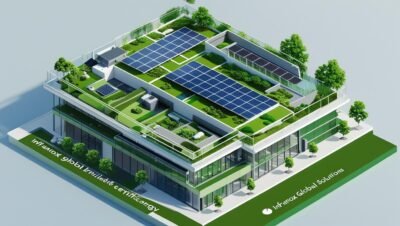
Why Green Buildings Are a Necessity, Not a Luxury
Global buildings account for a significant share of energy use and emissions. Constructing and operating conventional buildings contributes heavily to greenhouse gases and resource depletion. Sustainable construction directly addresses these problems by reducing operational energy, minimizing waste, and improving occupant health.
Traditional approaches are increasingly incompatible with modern obligations. Businesses and developers must plan for stricter regulations, rising utility costs, and growing stakeholder expectations for corporate responsibility. Eco-friendly architecture reduces risk and future-proofs investments by aligning buildings with current and emerging sustainability standards.
refer to wikipedia article: https://en.wikipedia.org/wiki/Green_building
Environmental Impact in Clear Terms
-
Energy consumption: Buildings are among the largest consumers of energy worldwide.
-
Carbon emissions: Construction and operation contribute substantially to global emissions.
-
Resource use: Non-renewable materials, high water consumption, and construction waste strain ecosystems.
By adopting green building practices, you reduce the carbon footprint of your projects and support a transition to lower-impact urban development.
Economic Benefits
Investing in green buildings delivers measurable economic returns. You often find that higher upfront costs are offset by reduced operating expenses, stronger market demand, and improved asset value.
Key financial advantages include:
-
Lower operating costs: Energy-efficient systems, improved insulation, and smart controls reduce utility bills.
-
Higher property value: Green-certified properties typically command premium prices and attract higher-quality tenants.
-
Favorable financing: Lenders and investors increasingly favor projects with demonstrable sustainability performance.
-
Improved occupancy rates: Tenants prefer healthier, energy-efficient spaces, leading to reduced vacancy and turnover.
These benefits mean that sustainable construction is not only an ethical choice but a prudent business decision that enhances long-term profitability.
Key Elements of a Green Building
A successful green building combines design, technology, and operational strategies to maximize sustainability and performance.
Materials and Construction
-
Use sustainably sourced and recycled materials to reduce embodied carbon.
-
Prefer low-VOC finishes to protect indoor air quality.
-
Implement construction waste management to divert materials from landfills.
Energy Efficiency
-
Integrate passive design strategies such as optimal orientation, daylighting, and natural ventilation.
-
Install high-efficiency HVAC systems, LED lighting, and energy management controls.
-
Consider renewable energy generation, such as solar PV, to lower grid dependency.
Water Conservation
-
Deploy rainwater harvesting and greywater reuse systems.
-
Fit low-flow fixtures and smart irrigation to minimize consumption.
Indoor Environmental Quality
-
Prioritize good ventilation, natural light, and non-toxic materials.
-
Monitor indoor air parameters to ensure occupant comfort and productivity.
Certification and Standards
-
Meet recognized benchmarks such as LEED certification to validate performance.
-
Align with local codes and international best practices to ensure compliance and market competitiveness.
Each of these elements contributes to reduced lifecycle costs and a smaller carbon footprint, making the building better for people and the planet.
The Future of Real Estate: Why Non-Green Buildings Will Become Obsolete
Market forces and regulation are accelerating the shift toward sustainable assets. Non-green buildings will face increasing challenges, including regulatory penalties, higher operating costs, and reduced market appeal.
Drivers of obsolescence include:
-
Regulatory change: Governments are tightening energy and emissions standards for buildings.
-
Investor priorities: Institutional capital is migrating toward assets with strong Environmental, Social, and Governance (ESG) credentials.
-
Tenant demand: Corporations seek spaces that support their sustainability commitments and employee well-being.
-
Insurance and risk: Climate risks and higher energy costs can increase insurance premiums and operational liabilities.
As a result, buildings that do not adopt energy efficiency measures and sustainable practices risk depreciation and diminished competitiveness. Planning for sustainability today prevents stranded assets tomorrow.
Read this 7 Powerful Green Building Strategies: BIM-Enabled MEPF Design for Net-Zero Performance | Infranox Global Solutions (IGS)
7 Powerful Green Building Strategies: BIM-Enabled MEPF Design for Net-Zero Performance | Infranox Global Solutions (IGS)Make this world turn green and sustinable with INFRANOX GLOBAL SOLUTIONS mail us at: info@infranoxglobalsolutions.com
One thought on “Green Buildings: The Key to Sustainable Construction Today”