



Introduction — a strong hook
The construction sector sits at the intersection of urgent climate action and massive economic opportunity. Buildings currently shape energy demand, create material-intensive supply chains, and determine the quality of life for billions — so every decision from masterplanning to material choice matters. Sustainable construction isn’t just an ethical or regulatory checkbox; it’s a strategic lever for resilience, long-term cost savings, and brand leadership.
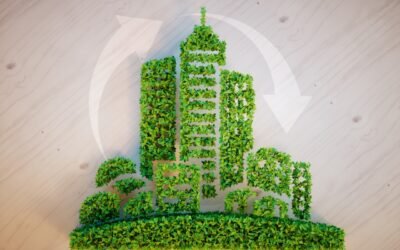
What is sustainable construction?
Sustainable construction means designing, building, operating and decommissioning buildings so their environmental, social and economic impacts are minimised across the whole life cycle. It combines energy efficiency, low-impact materials, resource circularity, healthy indoor environments and climate resilience into an integrated process — not discrete add-ons. Core principles include lifecycle thinking (LCA), material efficiency, passive design, renewable energy integration and occupant well-being. World Green Building Council+1
Why sustainable construction matters (benefits)
-
Climate mitigation: The buildings and construction sector is a major source of global emissions and energy demand. Addressing both operational and embodied emissions is essential to meet climate goals. UNEP – UN Environment Programme+1
-
Operational savings: Reduced energy and water consumption lowers operating costs over the building’s life.
-
Health & productivity: Better ventilation, low-toxicity materials and daylighting improve occupant health and worker productivity.
-
Value & compliance: Green buildings attract higher rents, lower vacancy, and increasingly align with investor and regulatory demands (ESG, Net-Zero targets).
-
Risk reduction: Resilient design reduces climate and supply-chain risk.
(The split between energy-use and material-related emissions matters for strategy: tackling both is required.) World Green Building Council
Key concepts, technologies, and components
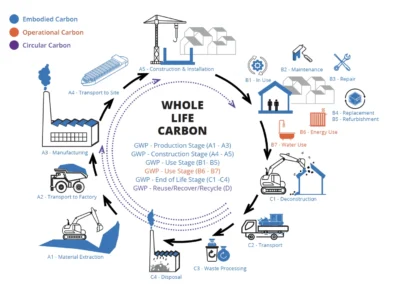
1. Whole-life carbon (operational vs embodied)
-
Operational carbon: Emissions from energy used to heat, cool, light and operate a building.
-
Embodied carbon: Emissions from producing materials, transporting them, construction, maintenance, and end-of-life. Whole-life carbon accounting is now best practice for prioritizing interventions. Buildings & Cities+1
2. Passive and low-energy design
Orientation, thermal mass, natural ventilation, high-performance glazing, shading and airtightness — these reduce energy demand before you invest in mechanical systems.
3. Low-carbon and circular materials
Options include lower-cement concretes, recycled aggregates, responsibly sourced timber (mass timber), and materials designed for disassembly and reuse.
4. Renewable energy and smart systems
Onsite PV, battery storage, smart meters, and building energy management systems (BEMS) let buildings be flexible, grid-friendly assets.
5. Water stewardship and landscape
Rainwater harvesting, greywater reuse, and landscape design that reduces irrigation needs support resilience in water-stressed regions.
6. Health & IAQ systems
Low-VOC materials, filtration strategies, and ventilation that is demand-driven improve indoor air quality and occupant comfort.
Sustainable construction in India — context and opportunities
India is rapidly urbanizing, and national and industry frameworks are maturing to support green building adoption. Homegrown rating systems (like GRIHA) and industry initiatives (IGBC) provide certification routes, while state incentives (e.g., additional FAR for certified buildings) reward adoption — creating both policy tailwinds and market demand for sustainable projects. For Indian developers and policymakers, whole-life carbon assessments, locally appropriate passive strategies, and material sourcing are especially high-impact levers. grihaindia.org+2igbc.in+2
Infranox Global Solutions works with Indian developers to integrate passive design, GRIHA/IGBC compliance pathways, and lifecycle carbon assessments into project roadmaps — accelerating green certification and long-term performance.
A practical step-by-step approach (for project teams)
Phase 0 — Policy & brief
-
Set whole-life carbon and energy targets.
-
Require LCA/EPD (Environmental Product Declarations) for major materials.
Phase 1 — Design & modelling
-
Use passive first design (orientation, shading, envelope).
-
Run dynamic energy models, daylighting and natural ventilation studies.
-
Select low-carbon structural systems early (e.g., optimized concrete mix, mass timber where appropriate).
Phase 2 — Procurement & construction
-
Specify EPDs, recycled material content and low-VOC finishes.
-
Optimize logistics to reduce transport emissions; implement waste management plans.
Phase 3 — Commissioning & operation
-
Commission HVAC and lighting thoroughly; deploy BEMS and tenant guidance.
-
Monitor energy and water; use data for continuous optimisation.
Phase 4 — End-of-life & circularity
-
Design for disassembly, plan for material recovery and reuse.
Challenges and realistic solutions
Challenge: Embodied carbon is often hidden early in the project
Solution: Mandate LCA at concept and detailed design stages; prioritize material efficiency and low-carbon alternatives early. Buildings & Cities
Challenge: Perceived first-cost premium
Solution: Use lifecycle cost analysis (LCCA) to show payback over 5–30 years; target high-impact, low-cost measures first (insulation, airtightness, lighting).
Challenge: Skills and supply chain gaps
Solution: Upskill local contractors, clarify procurement specs (EPDs), and leverage local material suppliers — developers like Infranox Global Solutions partner with supply chains to scale adoption.
Challenge: Regulatory fragmentation
Solution: Align project targets with national/state incentives and voluntary rating systems (GRIHA/IGBC) to capture subsidies and bonus FAR where available. igbc.in+1
Metrics & measurement — what to track
-
Whole-life carbon (kgCO₂e/m²) — includes embodied + operational. Use LCA tools and EPDs. rics.org
-
Energy Use Intensity (EUI, kWh/m²/yr) — target progressively lower EUI through passive measures and efficient systems.
-
Water use (L/m²/yr) — track potable vs non-potable usage and reuse rates.
-
Indoor Air Quality (CO₂, PM2.5, VOCs) — measure to ensure occupant health.
-
Waste diversion (%) — construction waste recycled/reused vs landfill.
Case examples & high-impact levers (concise)
-
Passive envelope improvements — biggest near-term operational wins.
-
Low-carbon concrete mixes & optimized structural design — significant embodied carbon reductions.
-
Mass timber (where appropriate) — stores biogenic carbon and speeds construction; ensure sustainable sourcing.
-
Onsite renewables + storage — reduce operational emissions and future-proof buildings against grid decarbonisation uncertainty.
-
Design for disassembly — supports circularity and future reuse value.
Frequently Asked Questions (SEO-friendly)
Q: What are the main differences between green building and sustainable construction?
A: “Green building” often refers to certification or a set of operational practices; “sustainable construction” emphasises lifecycle thinking — from material extraction through end-of-life — and includes social and resilience considerations. World Green Building Council
Q: How much of building emissions come from materials (embodied carbon)?
A: Estimates vary by building type and region, but embodied carbon is increasingly recognised as a large share of total life-cycle emissions — particularly for low-energy buildings where operational emissions fall. WorldGBC estimates materials and construction account for ~11% of energy-related emissions (with the rest from operational use). World Green Building Council
Q: Are green certifications worth it in India?
A: Yes — certifications like IGBC and GRIHA provide structured pathways, demonstrate compliance, and can unlock incentives (e.g., bonus FAR). They also help with market differentiation and investor confidence. igbc.in+1
Q: What is the first step to make an existing building more sustainable?
A: Start with a performance audit (energy, water, IAQ), then prioritise low-cost, high-impact measures: LED lighting, control upgrades, HVAC tuning, and occupant engagement.
Q: How does whole-life carbon accounting work?
A: It uses LCA tools and standards (e.g., EN/ISO LCA frameworks, EPDs) to quantify emissions across material production, transport, operation, maintenance and end-of-life, enabling trade-off decisions. rics.org+1
Conclusion & call to action
Sustainable construction is no longer optional — it’s a competitive necessity. By combining whole-life carbon accounting, passive design, low-carbon materials and smart operations, project teams can deliver buildings that are resilient, cost-effective and healthy. For Indian projects and multinational portfolios alike, using a pragmatic, staged approach ensures cost control while meeting ambitious climate and ESG targets.
If you want a turnkey approach — from whole-life carbon target setting to design review and certification pathways — Infranox Global Solutions offers integrated services that bridge technical modelling, procurement guidance, and on-site implementation to help projects meet GRIHA/IGBC and net-zero objectives. Contact Infranox Global Solutions to discuss a tailored roadmap for your next project.
Sources / selected references
-
Global Status Report for Buildings and Construction — UNEP / GlobalABC (2024). Key sector stats on energy use and emissions. UNEP – UN Environment Programme
-
What is a Sustainable Built Environment? — World Green Building Council (principles and embodied/operational split). World Green Building Council+1
-
IGBC — Indian Green Building Council (India certification programs and adoption figures). igbc.in
-
GRIHA — Green Rating for Integrated Habitat Assessment (Indian rating and lifecycle considerations). grihaindia.org
Read more about us:-
https://infranoxglobalsolutions.com/net-zero-building/
https://infranoxglobalsolutions.com/green-buildings-the-need-of-the-future/